
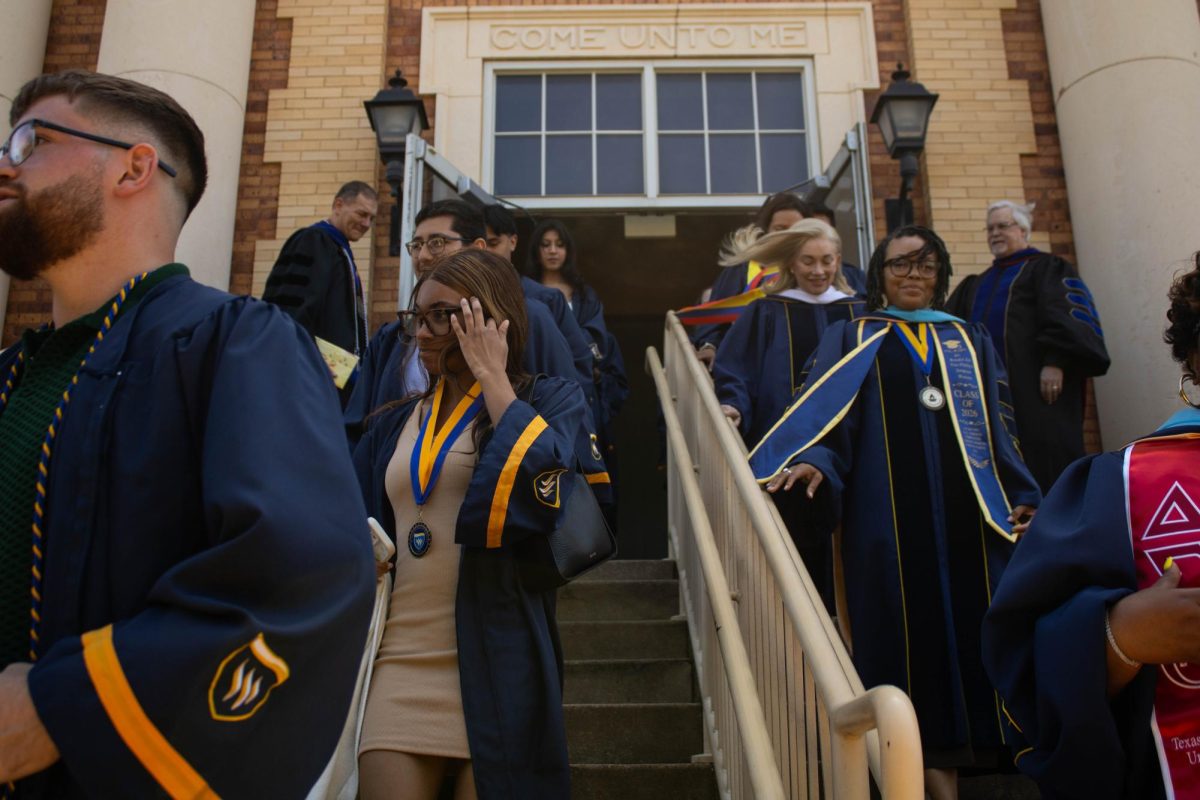








![Assistant Athletic Director of Academic Retention & Services Jill Gerloff delivers the opening speech at her final NGWSD dinner before her retirement. “I love all of my athletes and my women's teams always show up for me, and I want to make sure that I can do something to show up for them,” Gerloff said. [File photo]](https://therambler.org/wp-content/uploads/2026/02/OpeningSpeaker_Gerloff-1200x800.jpg)



















Texas Wesleyan has long been proud of its designation as a Hispanic Serving Institution (HSI), along with over 600 universities across the U.S. — but that designation is now being challenged on the national level for alleged unfairness and discrimination.
The Hispanic Serving Institutions Grant Program is administered by the U.S. Department of Education Office of Postsecondary Education. Universities with a 25% or higher Hispanic undergraduate enrollment qualify for the designation and are eligible for federal funding. The purpose of the grant is to expand and strengthen Hispanic student education outcomes.
On July 24, 2025, the State of Tennessee and the Students for Fair Admissions (SFFA) filed a lawsuit against the Department of Education, challenging the constitutionality of the HSI grant program. The plaintiffs believe that the program is unconstitutional by prioritizing one ethnicity above others.
The next day, the Department of Justice sent a letter to House Speaker Mike Johnson, explaining their decision to not defend these grant programs.
The letter written by Solicitor General D. John Sauer, states that the grants “violate the equal-protection component of the Fifth Amendment’s Due Process Clause.” The letter goes on to say that the government “lacks any legitimate interest” in differentiating universities based on the ethnic population of the campus, thus claiming the 25% racial quota “violates the Constitution.”
On Sept. 10, the Department of Education confirmed in a press release that funding to HSI programs will be eliminated for being unconstitutional.
“Everybody should be equal, but not everybody starts in the same place,” said Dr. Kay Colley, a professor of mass communication at Texas Wesleyan with a PhD in Higher Education from the University of North Texas. “You are not stealing an advantage, but an equalizer for people who have been historically wronged.”
Dr. Alistair Maeer, assistant professor of history at Texas Wesleyan, echoes how this threat challenges the mission of our university.
“We are a 135 year-old institution, our mission has always meant that we do more with less,” Maeer said. “And we serve those students who have been served less — we are supposed to be a leveler.”
Dr. Maeer also referenced how the arguments against Diversity, Equity & Inclusion programs (DEI) are similar to the lawsuits against HSI. He emphasized the importance of reading the fine print within the grant. The money is awarded to the university to improve the resources on campus in hopes of improved successful outcomes for the Hispanic community. Maeer explained that since the entire student population benefits from the improvements the grant money is used for, it doesn’t make HSI a DEI initiative.
“So the question here is, will the deciders take the time to read and to think about what HSI really is?” Maeer said.
The future of this program is unknown for now, but advocacy groups like the Hispanic Association of Colleges and Universities and the LatinoJustice PRLDEF have spoken up against this lawsuit and filed a motion to intervene in this case to defend the programs.
“This lawsuit is a direct attempt to erase programs that remedy racial and ethnic disparities and strip away essential resources from institutions that serve Latino students,” according to a statement by Francisca Fajana, Director of Racial Justice Strategy at LatinoJustice PRLDEF. “We have fought for educational equity for decades from defending K-12 access to supporting affirmative action in higher education. We’re ready to do the same here.”
The federal program provides $350 million in grant funding minority serving institutions across the U.S. including HSIs, Tribal Colleges, Historically Black Colleges & Universities, and Asian American & Pacific Islander Serving Institutions.
“It’s disheartening,” said senior marketing major Isabel Payan, an ambassador for the T3 scholar program at Texas Wesleyan. She shared her experience with her family, saying that school isn’t something thought about after high school.
“Many people in my neighborhood have that mindset — to go straight to work after and don’t think about education, or that it’s even possible,” Payan said. “To take away [these grants] doesn’t seem right to me when we should be encouraging others to go to school. It shouldn’t be about race.”
29.4 percent of Texas Wesleyan’s student body identifies as Hispanic. Senior mass communication major Carla Salazar, president of Texas Wesleyan’s Latinx Student Association, described the university’s HSI designation as a big part of her decision to enroll.
“My decision to come here was greatly influenced by it being a Hispanic-serving institution,” Salazar said.
51 percent of Hispanic students are first-generation college students. HSI grants provide vital support to students who often lack it. Texas Wesleyan University was recently named as a FirstGen Forward institution for its commitment to supporting First Generaton students; the elimination of HSI grants could weaken this support.
“Education itself is an investment. When it comes to Hispanic students, we are actively breaking barriers when we go to school,” Salazar said.

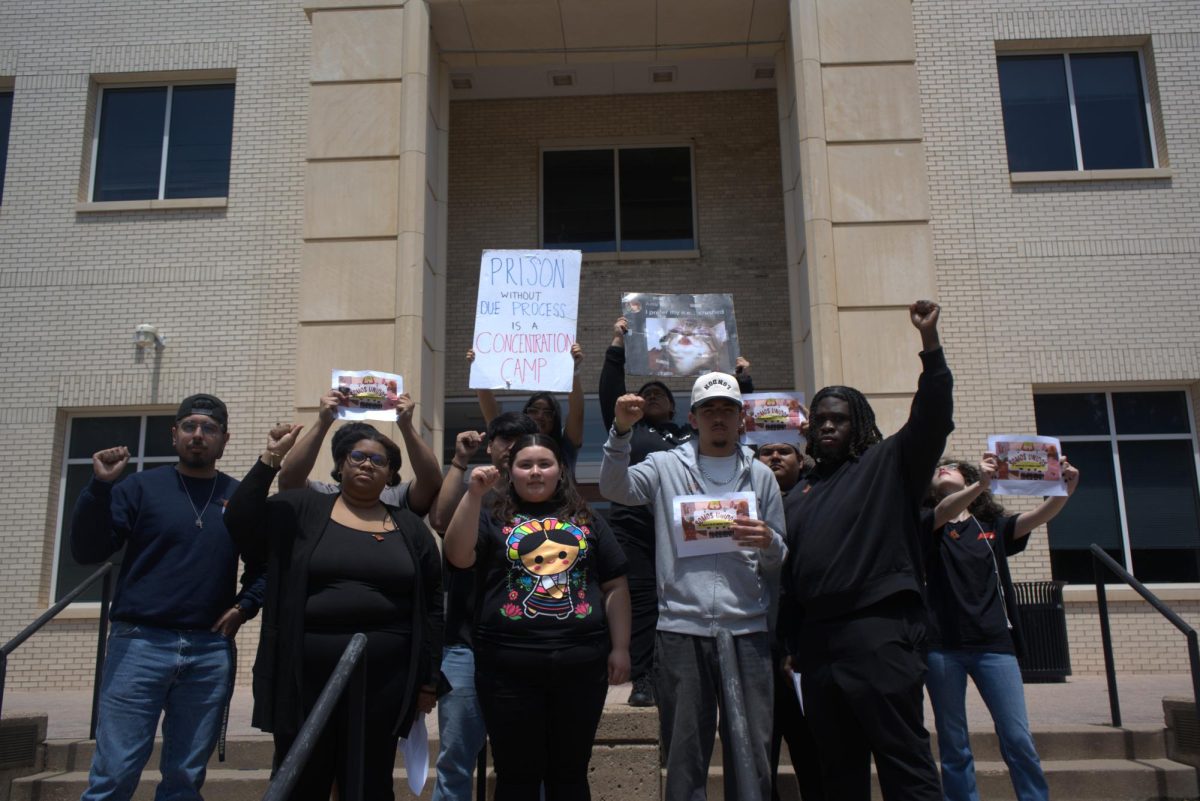
![The Latinx Student Association will stage demonstration against the conduct of Immigration Customs & Enforcement on Monday, May 4 on the Kay Granger Mall. [Graphic courtesy Gabriel Hernandez]](https://therambler.org/wp-content/uploads/2026/04/Informational-2-1200x720.jpg)

![[From left to right] Dr. Christopher Ohan, Micaelli Magday, Karen Gutierrez and Kehinde Hopkins stand on Congress Avenue in Austin, TX for the Texas Tribune—a Sumners sponsored event. [Photo courtesy Daylan Anderson Harris]](https://therambler.org/wp-content/uploads/2026/02/IMG_4009-2-900x1200.jpeg)


![[Photo courtesy SGA President Daylan Anderson Harris]](https://therambler.org/wp-content/uploads/2025/09/original-77184264-DD64-45D4-A585-B4FCB9A75301-932x1200.jpeg)

