






![Assistant Athletic Director of Academic Retention & Services Jill Gerloff delivers the opening speech at her final NGWSD dinner before her retirement. “I love all of my athletes and my women's teams always show up for me, and I want to make sure that I can do something to show up for them,” Gerloff said. [File photo]](https://therambler.org/wp-content/uploads/2026/02/OpeningSpeaker_Gerloff-1200x800.jpg)



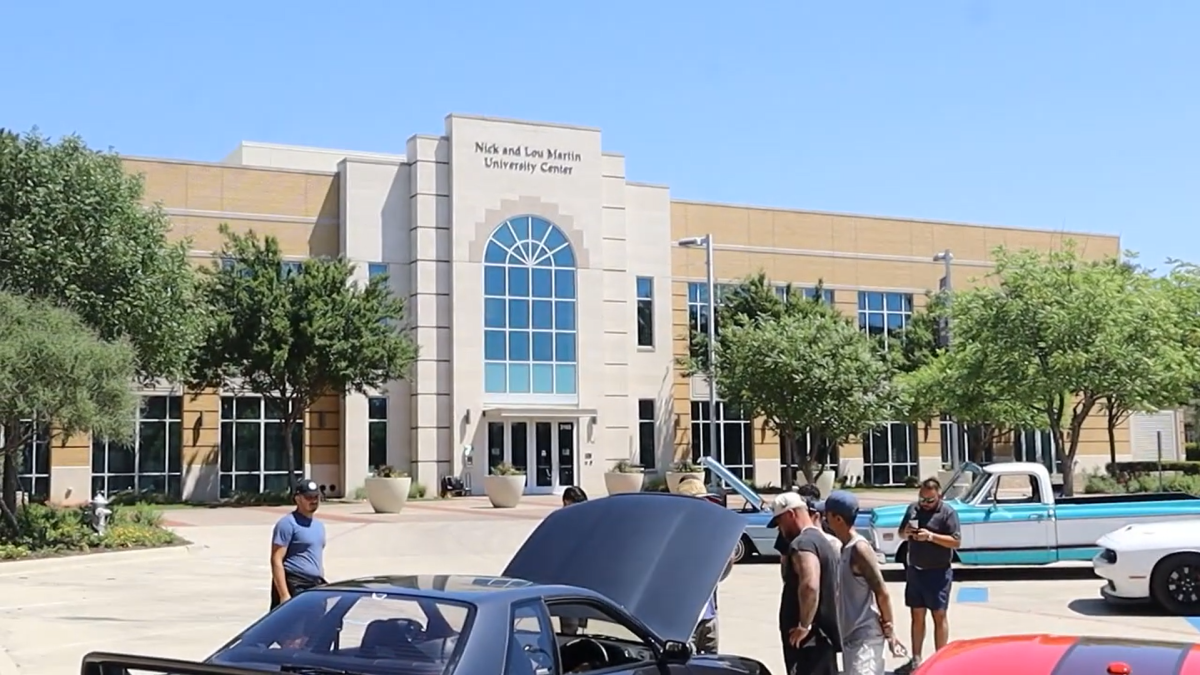











When Dr. Christopher Ohan first stepped onto the Texas Wesleyan campus in 1986, he never imagined he would one day return, not as a student, but as a leader helping shape the next generation of scholars.
“I can’t believe I’m back at Texas Wesleyan,” Ohan said. “When I first came here, I was just a clueless high school student who didn’t know what I wanted to do. Now, this place feels like home again.”
Ohan grew up in the Dallas-Fort Worth area, traveling across the country with his family to visit historic sites. Those family trips, he said, planted the first seeds of his lifelong passion for history.
“My parents were very big on going to historic places,” Ohan said. “We’d load up the station wagon and just go. I think that’s where the curiosity started.”
After earning his bachelor’s degree in history from Texas Wesleyan in 1990, Ohan went on to graduate school at the University of Texas at Arlington (UTA), where he completed a master’s in early modern European history and a Ph.D. in interdisciplinary humanities.
He soon began teaching in Texas and later accepted a Fulbright award that changed the course of his life.
“I went to Russia a month before 9/11 [the Sept. 11, 2001 terrorist attacks] and ended up staying for three years,” Ohan said. “From there, I went to the American University of Kuwait for eight years. Living and teaching overseas was one of the most rewarding experiences of my life.”
For Ohan, the world became his classroom. He traveled to places like Egypt, Israel, Lebanon, and Turkey often bringing history to life for his students.
“When I lived in Kuwait, I had a group of students who said, ‘Take us somewhere connected to the Crusades,'” Ohan said. “So, we went to Istanbul. It’s such a beautiful city, and it gave me a personal connection to history that I could never get from a book.”
Those global experiences continue to shape his teaching at Texas Wesleyan today.
“It’s enriched the way I teach history because it gives me a personal connection to historic sites,” he said. “I can help students see that history is not just dates, it’s lived experience.”
Beyond the classroom, Ohan’s research delves deep into how societies remember and reinterpret their pasts. His article, “From Hope to Escape: Post-Soviet Russian Memory and Identity,” examines how older generations in Russia recall life under the Soviet Union, often idealizing a time that was far more complex than nostalgia suggests.
“When I lived in Russia, I interviewed people who had lived under the Soviet Union,” Ohan said. “Many of them remembered those years as a period of greatness, even though the economy and society were falling apart in the 1980s. They longed for something that wasn’t real: a memory shaped by emotion, not fact.”
For Ohan, that paradox mirrors how Americans sometimes look back at their own history.
“We have this idea of ‘making America great again,’ but when was it truly great?” he said. “Every period in history has its flaws. I think instead of trying to return to the past, we should focus on making America something better than it is right now.”
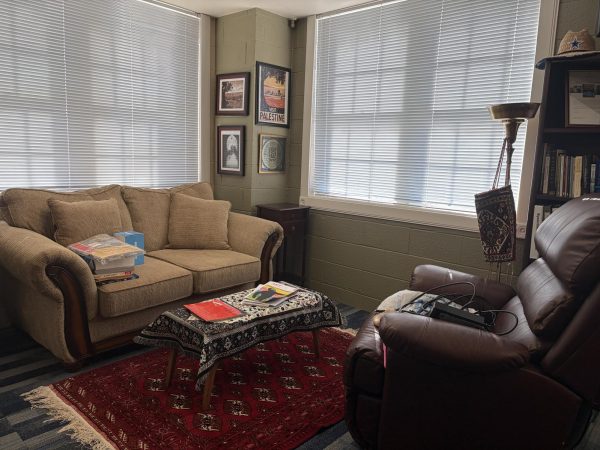
That mindset about examining the past with honesty and empathy defines both his scholarship and his teaching.
“If students can learn to question myths about the past,” Ohan said, “they can better understand the truth about the present.”
In 2013, Ohan received an email from his former colleague, Dr. Brenda Taylor Matthews, inviting him to apply for a position in the Texas Wesleyan History Department.
“I wanted somebody with his teaching experience and his world travel experience,” Matthews said. “We were doing more student travel at the time, and I knew I wouldn’t have to train him to be dedicated to Texas Wesleyan, he already was.”
Matthews, who once chaired the department, said she saw something special in Ohan even decades ago.
“He’s very dedicated to his students, to his job, to the university,” she said. “He makes history come alive. He brings the past into conversation with the present.”
Matthews’ decision to bring him back proved transformative for both the department and the university.
“Chris has done so much to strengthen the history program,” Matthews said. “He added new world history and European history courses, and he’s always looking for ways to make history relevant and exciting for students.”
Ohan’s teaching philosophy is rooted in critical thinking and compassion.
“I tell my students that history is not just about memorizing facts,” Ohan said. “I want them to look at the past, see the good, the bad and the ugly, and understand how we got here. If they can critique the past, they can think critically about the future.”
Ohan often connects classroom learning with community engagement. Each semester, his students complete service-learning projects like volunteering at food banks or local events.
“Taking a history class is not just about learning about the past,” Ohan said. “It’s about caring about the present. I want students to understand that education isn’t just about taking from society, it’s about giving back.”
Colleague Dr. Alistair Maeer, A.M. Pate Associate Professor of History, called Ohan “one of the greatest assets the university has.”
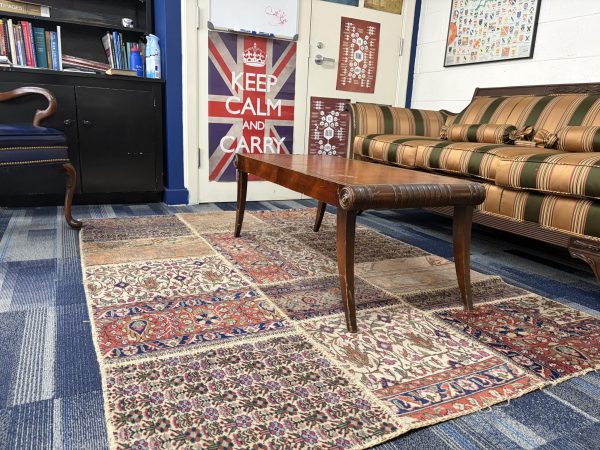
“He embodies both the historical role that Wesleyan has played for all types of people, and the new values that define it today,” Maeer said. “He’s student-centric, deeply believes in the power of education, and develops classes that reflect contemporary issues, like the history of civil rights.”
Maeer praised Ohan’s versatility as a teacher and leader.
“His specialty is medieval history – Saint Francis of Assisi, but he teaches everything from U.S. history to the modern Middle East,” Maeer said. “He always takes the classes that he thinks students need, not just the ones he wants to teach.”
As associate dean of the School of Arts and Sciences, Ohan’s influence extends beyond the History Department.
“He’s one of the best leaders on campus; hands down,” Maeer said. “He’s respected, even-handed and always focused on what’s best for students.”
Over his 30-year career, Ohan has received numerous honors, including the United Methodist Exemplary Teacher of the Year Award and the Wesleyan Flame Award. Yet, he remains humble about the recognition.
“It’s nice to be acknowledged,” Ohan said. “But awards don’t change what I do. They just remind me that maybe I’m doing something right.”
For Matthews, Ohan’s legacy is already clear.
“When students talk about him after graduation, they always say he was one of the hardest teachers they had, but also one of the best,” she said. “That’s the kind of teacher who leaves a real mark.”
From curious student to respected scholar, Ohan’s path reflects the very mission he now helps lead.
“He exemplifies the values, possibilities, and opportunities that Texas Wesleyan affords its students,” Maeer said. “He represents what can happen when you believe in this place.”
Looking back, Ohan said his return to Texas Wesleyan feels like destiny.
“I would tell my younger self to be confident,” he said. “Keep your faith strong, keep your chin up, because you’re going to be successful. I’ve met incredible people, traveled the world, and now I get to give back to the place that gave me my start.”
As he walks through campus, the same one that once felt so big to him as a student, Ohan smiles. The buildings may have changed, but his purpose has not.
“I started here,” he said. “And I’m still here, helping others find where they’re meant to go.”


![Hunter Heart (center), the play's lead, rehearses a scene alongside other student actors. [Photo courtesy Jacob Sanchez]](https://therambler.org/wp-content/uploads/2025/04/thumbnail_IMG_8412-1200x816.jpg)
![[Graphic courtesy Latinx Student Association]](https://therambler.org/wp-content/uploads/2025/02/LSApreview.jpg)